


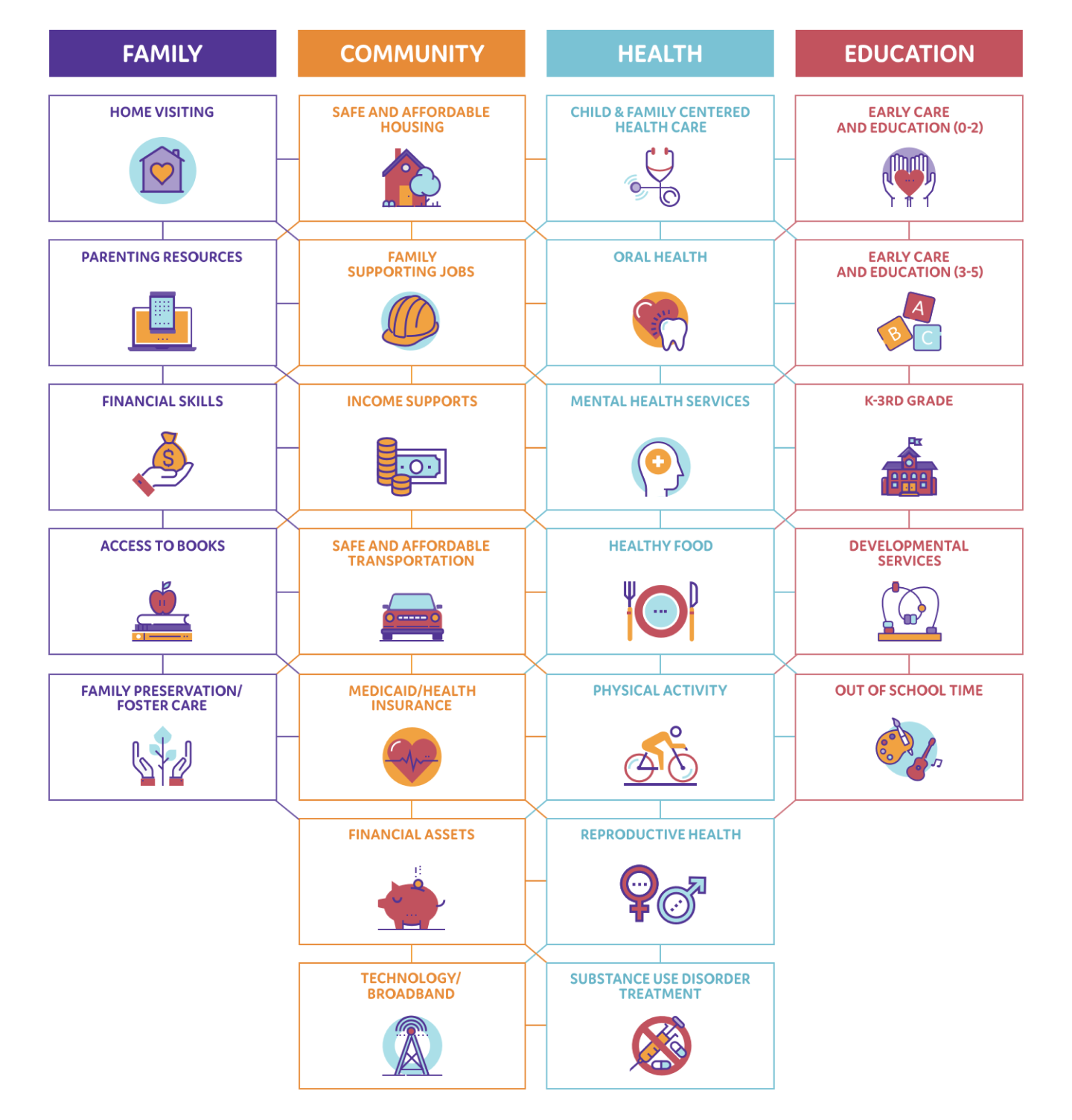
The Excel by Eight resource grid is the theory of change we use to improve health and education outcomes for young children in Arkansas. The grid focuses on four essential areas of a child’s well-being:
Family – Community – Health – Education
Like a power grid, the resource grid depends on strong connections and reliable flow. When essential resources within and across these pillars are weak, disconnected, or inaccessible, children can experience developmental challenges with long-term consequences for their health and education.
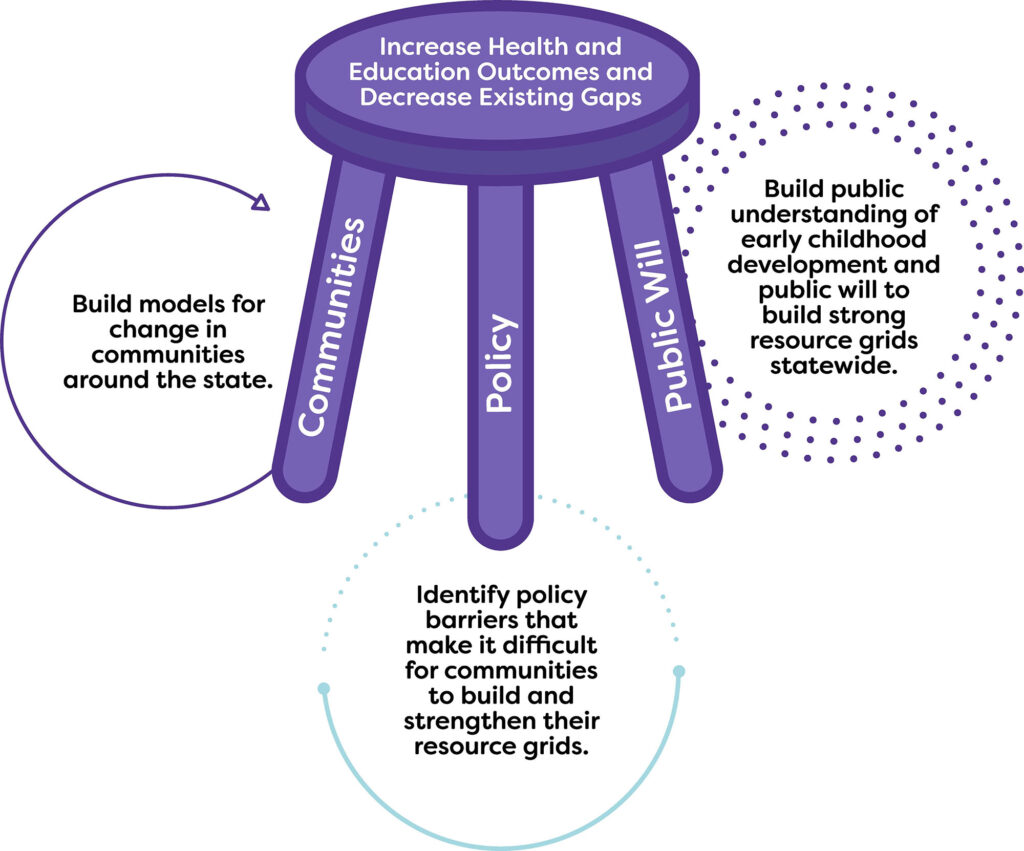
Through our partnerships with families, communities, policymakers, and businesses — and through our three-legged stool approach — we work to strengthen connections and power a strong and reliable resource grid for children across Arkansas.
Local models for change across Arkansas are designed to strengthen resource grids within each community so children have what they need to thrive.
Each E8 Community is led by a local steering committee and has its own structure, set of needs, and bright spots. They assess resources, identify gaps in their community’s grid, and develop and implement strategies to improve outcomes for children in their early years.
Rather than give communities a cookie-cutter model for change that doesn’t recognize their unique attributes, we connect them with resources and guide them through a planning process that is structured yet flexible enough to establish goals and create a realistic plan that builds upon their strengths and priorities.
Our policy work is referred to as the Excel by Eight Foundations Collaborative because it focuses on infants and toddlers. A child’s experiences in the first three years are the bricks and mortar of brain development, with more than one million new neural connections forming in an infant’s brain every second.
Entire communities benefit when we invest in children during these foundational years. This early investment begins at home but is also supported by effective programs and policies.
Government has a role to play in helping parents access needed services. With this early support, infants can grow into healthy kids who are confident, empathetic, and ready for school and life. And our communities, workforce, and economy become stronger and more productive as a result.