

Through HealthySteps, Pediatric Partners integrates developmental and behavioral health care
At Pediatric Partners in Fort Smith, a routine well-child visit can open the door to more than a physical checkup.
If a parent raises concerns about a young child’s behavior, or a screening identifies a need, the pediatrician doesn’t necessarily have to send the family elsewhere for help. Instead, the clinic’s Licensed Professional Counselor Chelsea Abbott, who also serves as its HealthySteps Specialist, can join the visit.
That kind of immediate support is part of the HealthySteps model, which integrates developmental, behavioral, and family support into pediatric primary care for infants, toddlers, and their families.
For pediatrician Dr. Chris Schluterman, having someone like Abbott embedded in the practice has helped fill a gap he and other providers encounter regularly.
“It would be great if we had somebody embedded in the office that could help take some of that load off of us and really do the type of care that we love to be able to do,” Schluterman recalled thinking when the practice first learned about HealthySteps.
Building support into pediatric care

Pediatric Partners began putting this integrated approach into practice four years ago, when it became one of Arkansas’ first seven HealthySteps sites. Since then, the clinic has adapted the model to fit its size, staff, and patients.
“One thing about HealthySteps is you can tailor it to each clinic’s needs,” Schluterman said.
At Pediatric Partners, children from birth through age 3 receive developmental and behavioral screenings during well-child visits and have access to the HealthySteps Specialist. When a need is identified, families may receive additional support, while children and families with more complex needs can receive more intensive follow-up. Abbott can also join the pediatric provider during a well-child visit, allowing the family to receive support from both at the same time.
That support can include dyadic mental health services, which bring a child and caregiver together to strengthen their relationship. Abbott completed additional training in Child-Parent Psychotherapy to provide therapy for children under 5 and their caregivers.
Dyadic mental health services recognize that helping a young child sometimes means understanding and supporting the adult caring for them, too. Schluterman said parents’ own experiences, including trauma or other adverse childhood experiences, can influence how they respond to their children.
That broader focus can require some explanation. Schluterman said some parents are wary when behavioral health or family support enters the conversation during a pediatric visit, particularly if previous experiences have left them concerned that someone is judging their parenting.
How Abbott is introduced to families can make a difference. Schluterman describes her as a resource who can connect families with help and “cheerlead for the parents.” Abbott reinforces that message herself.
“I’m not there to out-parent the parent,” she said. “My goal is to reassure them that ‘you’re the leader here.’”
More than adding a new service
Pediatric Partners’ experience also shows that integrating behavioral health care takes more than placing a therapist in a pediatric office.
The practice went through a couple of HealthySteps Specialists as it worked to find the staffing arrangement that fit the clinic. Schluterman said the practice was learning what successful integration required along the way.
“We were new at it, too,” he said. “We were learning what was going to work in our office.”
Earlier HealthySteps Specialists were employed outside the practice, an arrangement Schluterman said sometimes made it harder for them to feel fully integrated into the clinic. When Abbott joined, Pediatric Partners decided to employ her directly.
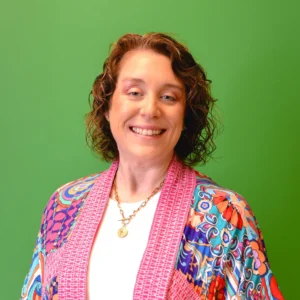
That integration shows up in small but important ways. Abbott uses the same electronic medical record as the pediatric providers, allowing her to communicate directly with them about concerns, treatment, and changes they may be seeing in a patient. A pediatrician can alert Abbott to something that comes up during a medical visit, and Abbott can flag concerns that may need the provider’s attention.
The clinic also rearranged its limited office space so Abbott could have a private place for counseling.
Pediatric Partners had another advantage: The practice had already participated in several quality-improvement projects before HealthySteps. Schluterman said that experience taught the team how to make small changes, study what happened, and adjust.
“I think because of that, we were positioned to hopefully succeed,” he said.
That willingness to adapt became especially important when the grant funding that launched HealthySteps ended.
While the additional Medicaid reimbursement has helped Pediatric Partners sustain HealthySteps beyond its initial grant funding, Schluterman said it does not fully cover the cost of a full-time HealthySteps Specialist. So the practice developed a hybrid role for Abbott.
The original HealthySteps sites were supported through philanthropic funding. In 2023, the Arkansas General Assembly passed Act 513, which created a supplemental Medicaid payment to help practices cover the cost of models such as HealthySteps. The policy gave participating clinics a more sustainable source of public funding after the initial grants ended.
In addition to her HealthySteps role, Abbott provides therapy to older children at Pediatric Partners, helping the practice respond to behavioral health needs across a wider age range. HealthySteps focuses on children from birth through age 3.
Schluterman said HealthySteps has been a valuable resource for the clinic’s youngest patients, while the practice was also seeing a need for more support among older children.
“Their needs don’t go away when they turn 4,” he said.
More than adding a new service
Having behavioral health care inside a pediatric practice can remove some barriers. Families can meet Abbott in a place they already know. Pediatricians can personally introduce her rather than giving a parent a phone number for an outside provider. The medical and behavioral health teams can communicate with one another as they care for the same child.
But Pediatric Partners’ experience also shows that integration alone does not solve every challenge.
Providing dyadic mental health services requires families to be able to participate consistently, which can be difficult when work schedules, transportation, and other demands get in the way. Practices must also navigate staffing, financing, billing, and other operational challenges. Pediatric Partners has had to adapt its approach as it learns what works for both the clinic and the families it serves.
It also shows why strengthening an early childhood system involves more than making a service available.
Screenings have to identify needs. Providers need somewhere to turn when they find them. Policy has to create a way to pay for care. Clinics have to build that care into their day-to-day operations. And families have to be able to use it.
Those connections are central to Excel by Eight’s work to strengthen the systems surrounding young children and families. HealthySteps is one way E8 and its partners have worked to better connect health care, developmental and behavioral supports, families, and public policy.
Pediatric Partners shows what can happen when those pieces begin to come together and where challenges remain.
The clinic has not solved every barrier to children’s mental health care. But its experience offers something valuable: a clearer picture of what it takes to move an evidence-based model from policy and funding into the everyday work of caring for children and families.