
In Sevier County, a walk through the park can also be an opportunity to build the skills young children need to thrive.
In 2019, Sevier County participated in a community assessment to better understand how young children were developing. The results pointed to clear areas of need: physical activity, fine motor skills, gross motor skills, and social-emotional communication. For local partners, the data created an opportunity to think differently about how everyday community spaces could support kindergarten readiness.
“So this project originally focused on kindergarten readiness through the Ages and Stages Questionnaire, which is the developmental screening tool,” said Beth Tody, Sevier County regional consultant. “What we found from those screenings, they were lacking in fine motor skills, gross motor skills, and social emotional communication skills, and so we needed to develop those skills, so that on their first day of kindergarten they are ready for kindergarten, and they’re not behind.”
Through Excel by Eight’s local models for change approach, Sevier County partners worked to strengthen the resources already available in the community. Rather than starting from scratch, they looked at existing parks, public spaces, and community assets and considered how those places could better support early childhood development.
“One of the pillars of Excel by Eight is to develop community models for change,” said Jessi Rice Woods, communities director for Excel by Eight. “We really wanted to take the grain of an idea that came from the community and develop it far and wide for the development of our youngest residents here in Sevier County.”
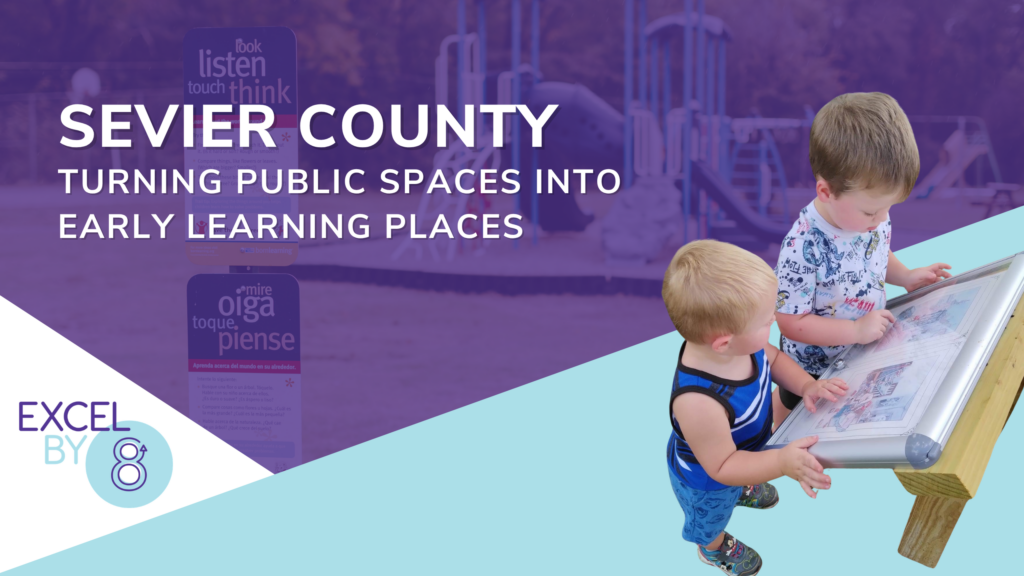
The result was a parks project designed with young children and families in mind. Partners installed a Born Learning Trail at Horatio City Park, multiple book trees, and a StoryWalk® at Hendrix Park in Horatio. These resources encourage movement, reading, conversation, and family engagement in spaces where children can learn through play.
The project reflects what local systems change can look like in practice. Community partners identified a need, used data to guide their priorities, and built on existing assets to create a more supportive environment for young children.
For Excel by Eight, this is the purpose of local models for change: supporting communities as they identify gaps in their resource grids and developing strategies alongside local and statewide partners that improve outcomes for children prenatal to age 8.